The Carlisle Carriage Factory
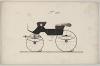
The years from 1850 to 1910 were the height of the carriage era in the United States.

c. 1890 showing North & West sides of entire Carlisle Market House. View includes dirt streets, horse & carriage, people on brick sidewalk, gas lamps, and young trees (Photo ID# 04-A-01).
“Introduction of Gas!” proclaimed the Carlisle Herald in its June 4, 1856, edition, while a headline in the June 5, 1856, edition of the American Volunteer reported:
“GAS—THE LONG LOOKED FOR COME AT LAST.—On Friday night last, gas was introduced into our borough….Our citizens, who had almost been hoping against hope to see this, to them a strange phenomenon, were delighted, and expressed their pleasure in warm terms of commendation as to the energy, enterprise, and success of the managers, directors and workmen connected with the Carlisle Gas and Water Company. The street lamps shine most beautifully, the hotels, stores, and other business places which have introduced it, sparkle like a new dollar, and altogether we may say that the introduction of gas forms THE event in the history of our ‘venerable and ancient borough’…”
The following week the Carlisle Herald1 reported that on Thursday the Town Council announced that during the summer months the lamps are to be lit only until 11 p.m. and during the winter months until 10 p.m. James Spangler was elected Lamplighter to the Borough for one year at a salary of $80.
There were complaints, and two years later the Carlisle Herald ran an article titled “Let It Be Remedied—Whilst everyone is willing to do justice to the energy and public spirit of those who projected and carried out our Gas and Water Works, we cannot say much for the wisdom of our town council who passed the Ordinance to regulate the lighting of our streets. Why cannot the gas lamps be lighted on every dark night—be it old moon or new moon, first quarter or last quarter?
“The rule appears to be as soon as we have a new moon, cut off the gas. But we all know that for the first four or five nights of a new moon, she is very sparing of her light upon this planet. Then too, we do not always have clear bright evenings when the moon should shine. It clouds up and rains in the first quarter; as well as the last; and much as she might be disposed to shed her light upon the path of the bewildered pedestrian, obstacles intervene which she cannot remedy, but which our ‘Borough Fathers’ can, by giving us gas. Come, gentlemen. Make it a rule that whenever the lamp-lighter cannot see his shadow plainly in the moonlight, he is to turn on the gas.”2
In the June 13, 1862, issue of the newspaper, the editor of the Carlisle Herald, who was frustrated and annoyed at the lighting situation in Carlisle, took the town council to task. He wanted to know whether the street lamps in Carlisle were made for ornamental purposes or for use. “Why is it, Oh worthy ‘Board of Bunsbys’…” he wrote, “that on wet and stormy nights we have no light?” He wondered if it was because the town council were trying to be economical or was it due “to the delicate health of the lamplighters?” He continued, “Whoever has charge of the lighting of the lamps seems to think that the moon always shines when the almanac says so. This certainly is a very peculiar kind of lunacy.”
No matter how many times the editor mentioned the subject it appeared to do no good he wrote. He said that the preceding Friday through Wednesday nights were dark and stormy, and that not one street light was lighted. “Is there no way of mending this matter?” he queried.
The years from 1850 to 1910 were the height of the carriage era in the United States.
1Carlisle Herald, June 11, 1856.
2 Carlisle Herald, May 19, 1858.