James E. Largent Sr.
Interview of James E. Largent Sr. by Randy Watts on July 30, 2015. The interview focuses on the Largent's experiences growing up and his time working for a railroad company.
During the presidency of George Washington one of the early major issues confronting him was raising taxes to pay the debt of the states incurred during the Revolutionary War. Treasury Secretary, Alexander Hamilton in 1790 recommended an excise tax on domestically produced distilled spirits (the Whiskey Act of 1791).1
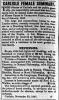
In 1856, Solomon Gorgas, a successful businessman, state legislator, and influential resident of Mechanicsburg donated land for an institution for the education of women.
George Ross (May 10, 1730—July 14, 1779) was born in New Castle, Delaware, the son of Rev. George and Catherine Van Gezel Ross, studied in Philadelphia, opened his law practice in Lancaster in 1751, and was named the King’s attorney for Cumberland County.
Interview of Newton C. Robbins of Carlisle by Michael Collins on June 17, 2015. The interview focuses on Robbins early life, World War II experience, work in the State Police, aviation, and founding the Carlisle Crimestoppers.
Encouraged by the editor of the Carlisle Herald newspaper to submit reminiscences for the entertainment of his readers, James Miller McKim wrote several lengthy articles under the pen name AGC. (A Genuine Carlisler.) The February 8, 1872 edition of the newspaper contained McKim’s reminiscences of Carlisle in the 1820s and 1830s and included memories of Nicholas Ulrich and his tavern. McKim wrote:
In 1933, the newly elected president, Franklin D. Roosevelt initiated a variety of steps to deal with the drastic effects of the Great Depression. Collectively these initiatives were known as the “New Deal.” One of those efforts was the Civilian Conservation Corps (CCC).
The National Register of Historic Places was organized by the National Historic Preservation Act of 1966.
For nearly a century, the Carlisle Hospital complex occupied a block of land in the southwest section of Carlisle. The limestone, landmark building was razed in 2007 following a decision by the hospital board to sell the hospital to Health Management Associates, Inc.
Before the days of the Pennsylvania Turnpike and Interstate 81, and the attendant motels and restaurants, when motoring travelers passed through Carlisle’s downtown on Hanover and High Streets, Carlisle had a notable hotel named the Molly Pitcher Hotel.