W. Raymond Black’s Garage and Cadillac Dealership
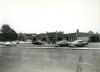
The garage that W. Raymond Black built in 1928 was an architectural gem, and the only building of its kind in Carlisle. It would stand for 76 years.
The garage that W. Raymond Black built in 1928 was an architectural gem, and the only building of its kind in Carlisle. It would stand for 76 years.
Interview of Merri Lou Schaumann for the Elizabeth V. and George F. Gardner Digital Library Memory Bank. Schaumann discusses growing up in Euclid, OH before coming to Carlisle, PA. During her time in Carlisle she became a prolific researcher of local history leading to the publication of numerous books and volunteering with the Cumberland County Historical Society.
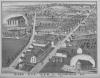
In 1812, tavernkeeper Michael Forner laid out lots on a piece of land on the road from Carlisle to Newville. He called the new town Plainfield. Plans were afoot for a Grand Turnpike from Harrisburg to Pittsburgh, and Forney thought it "would more than probably go through his new town."It did not. Often referred to as Smokey Town, the name Plainfield was officially adopted with the opening of the Post Office. The map of Plainfield in the 1872 Atlas of Cumberland County shows the locations of the shops, two churches, the school, the hotel as well as the houses. Plainfield grew, and by 1910, the village had approximately 200 residents.
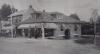
With the coming of the automobile in the first decades of the 20th century, travelers took to the roads, and tourist homes sprang up to cater to their needs.
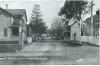
It was a good day for Shippensburg photographer Clyde Laughlin to take photographs of Oakville because there were no leaves on the trees. Mr. Laughlin produces post cards from the photos he takes of the towns and villages of Cumberland County. His camera captures a horse and buggy traveling towards him on Main Street, and the two young boys who are peering over a fence watching what he is doing. The white-washed Rail Road Crossing sign post warns people to Stop, Look, Listen.
Who was this man with a most unusual name? In 1817, Charles B.T. Waggoner petitioned the court of Cumberland County to grant him a license to pedal. According to Pennsylvania law, a man would only be granted a license if he could not earn a livelihood because of a disability.
The humming of the saws at the mill could be heard as you approached the general store. Sheaffer & Williamson Dealers in General Merchandise reads the sign above the windows on the second floor of the general store. As in many villages, the general store also served as the Post Office, and the Huntsdale Post Office sign hung from the porch roof. Six men are standing on the porch staring at the photographer on the other side of the road. Wooden posts stand at the edge of the dirt road ready for customers to tie up their horses. The scene resembles other small villages in the county, but this is the village of Huntsdale on Pine Road in Penn Township, Cumberland County.
Mount Holly Springs is situated at a gap in the South Mountain, approximately six miles south of Carlisle.
"Daring Robbers Visit Daniel Drawbaugh's Residence at Eberly's Mills" ran the headline in the newspaper. Daniel Drawbaugh, known as "The Edison of Cumberland County," for his invention of the electrical telephone in the 1860s, was 76 years-old at the time of this incident.
Interview of Marilyn Stoner Swartz for the Elizabeth V. and George F. Gardner Digital Library. Swartz discusses what it was like growing up helping her family run the Willow Mill Amusement Park in Silver Springs, PA.