Trains in Song and Poetry
“… All through the meadows the horses and cattle:
All of the sights of the hill and the plain
Fly as thick as driving rain;
And ever again, in the wink of an eye,
Painted stations whistle by …”1
“… All through the meadows the horses and cattle:
All of the sights of the hill and the plain
Fly as thick as driving rain;
And ever again, in the wink of an eye,
Painted stations whistle by …”1
Eric Swidler is proud to oversee the group of radio stations that his father has maintained in Carlisle for over fifty years. Radio Carlisle under Swidler leadership will celebrate sixty plus years in 2025. In 1960, Eric’s father, Harold Z. Swidler, enjoyed listening to radio as much as anyone.

In 1989, Camp Hill businesswoman, Nikki Knerr, became increasingly concerned with the lack of awareness for the AIDS epidemic. Knerr and her friends decided to create an event to raise funds and awareness for AIDS organizations in Central Pennsylvania.
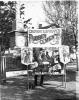
Charles A. Henneberger was the proprietor of the Eagle Hotel on Main and High streets in Newville. A collector of taxidermy, among his specimens of birds and beasts were a wild-cat and a snow-white squirrel from the North Mountain. He also collected reptiles.
Silver spoons and tableware were considered valuable assets in 1780. Spoons and a few other pieces of tableware such as “Mustard Potts” represent entries among a handful of the county’s residents. They are not found in the earliest county tax lists.
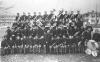
Dennison Wheelock was one of the most famous students to pass through the Carlisle Indian Industrial School. Wheelock was a promising music student at the Carlisle Indian School, and after he graduated, he became a prominent composer.
Interview of Jim Leonard for the Elizabeth V. and George F. Gardner Digital Library. Leonard discusses growing up in Enola, PA and his family's connection to the Enola Rail Yard. He further goes into details on his own work at the Rail Yard over the course of thirty years.
Andrew Carothers’ was a native of Cumberland County. He was born in 1778 in Silver Spring Township to John and Mary Carothers. His father, John Carothers, served as a County Lieutenant during the Revolutionary War.

In January 1773, merchant Samuel Wharton wrote the following observations about tea drinking in America.
"The use of teas, and of the black sort in particular, is so common and fashionable in America that it is usually drank twice a day, even by the Frontier inhabitants of all the colonies...
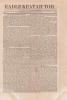
During the 39-year duration (1879-1918) of the Carlisle Indian Industrial School, students and faculty worked together to produce several news publications for the School’s students and those interested in its work.