Recent

An Inflexible Patriot: Major James Armstrong Wilson and the Home He Left Behind

Northeast of Carlisle borough near the intersection of Cavalry Road and Route 11 sits a distinguished, white-washed, brick home known as the Wilson House. That impressive structure bore witness to a part of the compelling story of Revolutionary War officer Major James Armstrong Wilson. He has frequently been confused with another James Wilson (1742-1798) who signed the Declaration of Independence and was a resident of Carlisle for a time.

Editor's Introduction - 2012

The 2012 issue of Cumberland County History is an eclectic mix of articles spanning from the eighteenth to the twentieth centuries. It has been a pleasure to review the numerous articles submitted over the past year. They have included a wide variety of topics and have been extremely well written and researched. Sufficient articles were submitted to warrant two issues. A number of submissions are being held for publication in 2013. I am certain that the eight articles published in this issue will be of interest to our readers.

What's in a Name? Camp Hill

During ten generations the area now known as Camp Hill has borne five other names: Hendricks, Fort Pleasant, Oysters Point, Bowmanstown, and White Hall. Since 10 November 1885 an incorporated borough, it is part of the West Shore community that in 1731 was offered to Indian tribes as a reservation and in 1750 became the Penn family's Manor of Lowther.

Tanis Monroy

Tanis Monroy

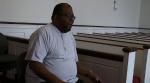
Interview of Tanis Monroy at the Black History Festival in Carlisle, Pennsylvania for the Elizabeth V. and George F. Gardner Digital Library Memory Bank. Monroy talks about moving to Carlisle at a young age from New York via Allentown and how he would visit the War College, write poetry, and walk around town. He discussed how he hoped for further integration between Dickinson College and the community and that students would be more open to experiencing Carlisle. He also hopes more residents will engage with the community through community service.

Penn Township: 125 Years

Penn Township was erected 23 October 1860 when the western half of Dickinson Township was made into a separate political and territorial body. Its creation was the result of a continuing effort lasting for at least twenty years. This subdivision was but one in a series of similar moves begun at the settlement of the Province and continued in Cumberland County until 1929.

Silas C. Swallow - Reformer

Dr. Silas C. Swallow had already established a widely circulated reputation for being a determined fighter against the evils of strong drink and drugs before he became a resident of Cumberland County. The good Doctor of Divinity had other lesser-known qualities of character which were revealed during the ten years he lived in Camp Hill.

Christian Frederick Post: Missionary and Diplomat

The early history of Pennsylvania is sprinkled with the exploits of daring, energetic, and forceful individuals. One of the most fearless and dedicated, yet least remembered of these personalities, was Christian Frederick Post. A humble man of God, he spent over forty years among the Indians and Whites of colonial America, spreading the Gospel and working for peace. He passed some of this time traveling through or living within the present borders of Cumberland County.

The Mechanics of Mechanicsburg: The Naming of a Central Pennsylvania Town

The state Highway Department historical marker erected in the 1920's at the east end of town states that Mechanicsburg, settled in the 1790's and incorporated in 1828, is "named for a settlement of mechanics." Legend states that pioneers traveling along the Trindle and Simpson Ferry roads on their way west stopped here to repair wagons damaged during the crossing of the Susquehanna river which flows east of the settlement.

Pages