Letter: Mr. James McManus, Merchant from H. W. Peterson, 1823
A gentleman squires young ladies around the State Capitol.
A gentleman squires young ladies around the State Capitol.
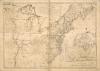
In 1916, P. Lee Phillips, Chief of the Division of Maps and Charts at the Library of Congress, wrote to the editor of the Carlisle Evening Herald newspaper seeking information. The editor printed the letter under the following headlines.
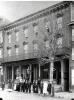
In October 1866, A. K. Rheem, the publisher of the Carlisle Herald, visited Mechanicsburg to look at improvements in the town. He wrote the following article about his visit: “The most important and noticeable new buildings are the Market House and the Merchant's Hotel. The former is a splendid brick edifice beautifully built and running through the entire depth of a square.
Because William Milligan went into debt and petitioned the court for the Act of Insolvency, a paper trail provides a look at the business of a coach maker in a small Pennsylvania town in the 1830s.
“Kriss Kringle’s Head Quarters” and “The Temple of Fancy,” declared Monyer’s newspaper advertisements.1 Monyer’s store was an emporium of delights for children. Its glass cases displayed candy toys, bon-bons, chocolates, fruit drops, and colorful hard candies.
In May 1828, Dr. James Patterson Henderson1 set out on horseback from Western Pennsylvania to visit his relatives in Lancaster, Pennsylvania. He kept a journal filled with details of the places he saw and the people he met.
This letter was written by John E. Moore at Bellefonte, Pennsylvania on a Friday afternoon. Although the letter is not dated, it was written after 1847 and before 1856. He is visiting his sister Augusta (Gus) who married Samuel Linn on December 1, 1847. John describes his trip to Bellefonte in full detail. Note: John wrote three pages without a single paragraph, so they have been inserted for the sake of the reader.
Mount Holly Springs is situated at a gap in the South Mountain, approximately six miles south of Carlisle.
The scene of the murder was the “Sign of the Indian Queen” tavern on Carlisle’s West High Street. The victim was tavernkeeper Robert Grayson. Grayson had been a tavernkeeper in between positions as the county jailer in the 1790s and High Sheriff from 1801-1804.
When one thinks of the past, crime is not the first thing that jumps to one's mind; it would probably be the last thing, if thought about at all. Today when one thinks of crime, one thinks of muggings, robbery, murder-the same things that took place then. The most common crime then was assault & battery.