Mary Parker Moore1 had a privileged life. She was the daughter of Carlisle Attorney Isaac Brown Parker and his wife Maria Ross Veazey.2 When Mary was 24 years old she married Johnston Moore from an old and prominent Cumberland County family.3 Mary had been busy since she and her children returned from a visit to her parents in Burlington, New Jersey and wrote the following letter over several days.
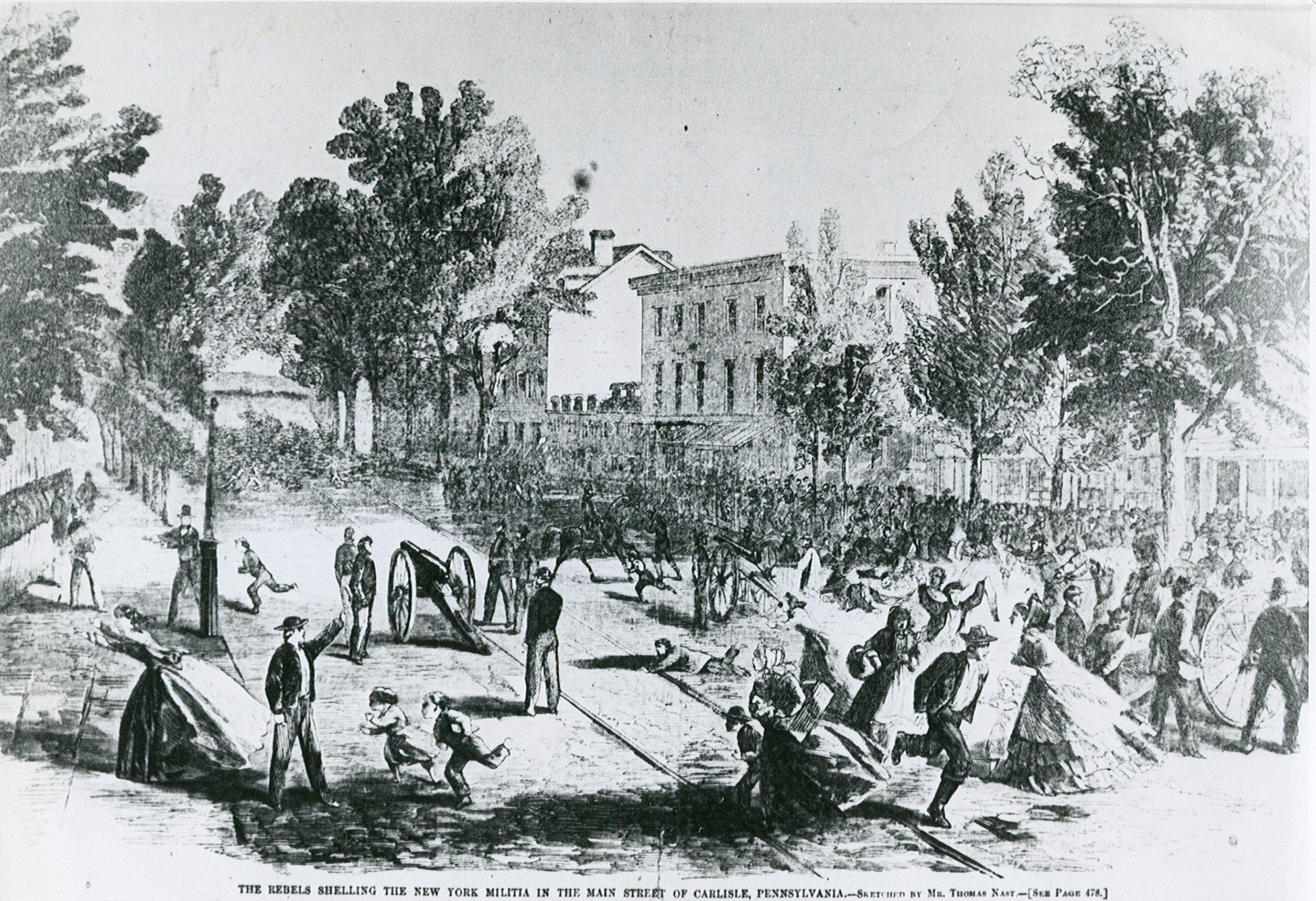
Carlisle July 31 and August 4, 1863. “We have very unpleasant weather—raining every day—it is very damp and sickly here. A great many deaths—the wet weather together with the dirt and filth left here by the rebels has caused it—for our town was in an awful condition when they left. They fed their horses on the pavements and tied them to the trees and the iron rails of our door steps and they were [ ] all over the streets…Our church has suffered a good deal—windows broken and the chancel ceiling is utterly ruined.4 I am so sorry for it was so beautiful. Everything about our place is beginning to look as usual. The grass that they trampled down is growing up and the fences they tore down have been all put up so that you could hardly see that they had been here. Business is commencing in town and everything cleaned up—only the houses that were struck by the shells and the [barrack?] walls of the Garrison are the only traces of the raid. Poor Mr. Metzger and his niece Mrs. Chamberlain5 on the night of the shelling ran out to the creek and sat on a rock all night—he in his slippers and dressing gown and she in her wrapper. He carried in his hand a little box with his valuable papers. He left everything else at the mercy of the rebels, but fortunately they went off and did not go near his house. He was dreadfully frightened and says he will never get over it.
Cousin James Hamilton6 took a violent cold and has been ill ever since. I should not be surprised if it is the cause of his death for it has been the death of several of the old citizens staying in their damp cellars and the next day [ ] into the hot sun. It was an awful thing. I am thankful I was not here or any of the children. I pray they may never come again. They must keep the border well protected now and keep them back.”
I hope you have recovered dear Father. I am very obliged to you for your kindness for me and my children while with you. The children enjoyed their visit very much and will never get done talking about it.
Give much love to dear Mother. I hope she is quite well. I was very sorry to leave you, but I had to do it as I was so much wanted here.”