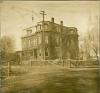
Diaries of Miss Blanche L. Dum, Carlisle High School Teacher
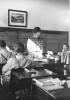
In 1904 Blanche’s parents, Annie Simons Spotts and George Billow Dum prepared for the family’s move from Landisburg to Carlisle. Annie was pleased to have acquired three quarts of onions.
The Cumberland County Historical Encyclopedia is an expanding publication on the history of the Cumberland County. Covering a wide range of topics and the entire Cumberland County geographic region, the Encyclopedia seeks to be an initial entry point to those interested in the County's history. Entries seek to provide a list of resources available as well as showcasing some of the Cumberland County Historical Society's own collections.
In 1904 Blanche’s parents, Annie Simons Spotts and George Billow Dum prepared for the family’s move from Landisburg to Carlisle. Annie was pleased to have acquired three quarts of onions.
Carlisle father and son die of the same disease on the same day of the week in the same building four years apart.
Other than occasionally noting that it had been very wet, very dry, or the warmest summer or the coldest winter within the memory of some of the oldest residents, the newspaper rarely reported on the weather.
Born on October 3, 1908, to Guy and Ada Brandt Eberly in Mechanicsburg, Pennsylvania, Ira Shuey Eberly II grew up around the family lumber business.
For several decades during the second half of the 19th century, William Egolff and his sisters Elizabeth and Barbara operated a boarding house in Carlisle in the three-story brick building at No. 7-11 North Hanover street.
The August 6, 1869 edition of the Carlisle Herald reported on the Grand Tournament held several days before to celebrate “the emancipation of the slaves of the Southern States” by a procession through the streets of Carlisle and a tournament at Graham’s Grove.
Carlisle Herald, July 11, 1872. “The colored citizens of Carlisle and vicinity, contemplate holding a grand National celebration, in commemoration of the Emancipation Proclamation of President Lincoln in this place on Thursday, August 1, 1872.
The Pennsylvania Railroad (PRR) significantly expanded its infrastructure in the early 1900s to handle growing volumes of both freight and passenger traffic.
The purpose of this narrative is to document, based on the available evidence, the approximate location of entrenchments said to have been constructed at Carlisle, Pennsylvania, during the French and Indian War.
Mrs. George H. Stewart and her sons Alexander and George, Jr.1 left New York on May 30, 1912 aboard the Carpathia.