Letter: Mr. James McManus, Merchant from H. W. Peterson, 1823
A gentleman squires young ladies around the State Capitol.
The Cumberland County Historical Encyclopedia is an expanding publication on the history of the Cumberland County. Covering a wide range of topics and the entire Cumberland County geographic region, the Encyclopedia seeks to be an initial entry point to those interested in the County's history. Entries seek to provide a list of resources available as well as showcasing some of the Cumberland County Historical Society's own collections.
A gentleman squires young ladies around the State Capitol.
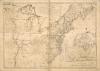
In 1916, P. Lee Phillips, Chief of the Division of Maps and Charts at the Library of Congress, wrote to the editor of the Carlisle Evening Herald newspaper seeking information. The editor printed the letter under the following headlines.
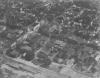
Mechanicsburg is situated about midway between Harrisburg and Carlisle. Due to this location, it was a reasonable place to build an inn and tavern which resulted in the beginning of the town.
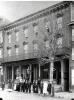
In October 1866, A. K. Rheem, the publisher of the Carlisle Herald, visited Mechanicsburg to look at improvements in the town. He wrote the following article about his visit: “The most important and noticeable new buildings are the Market House and the Merchant's Hotel. The former is a splendid brick edifice beautifully built and running through the entire depth of a square.
The township of Middlesex lies along the northerly half of the west side of the Stony (“Stoney”) Ridge, a geological trap dike (older than the North or South mountains) which formed the original boundary between the west and east divisions of Pennsborough Township (established in 1735) as early a
Mifflin Township was named in honor of Thomas Mifflin, a colonial leader during the years of the American Revolution who became the first governor of Pennsylvania. His name was given to many places in the state, including Mifflin Townships in Lycoming County, Dauphin County, and Columbia County.
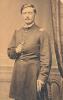
Captain William E. Miller was one of the few Cumberland County residents who won the Medal of Honor during the Civil War. However, Miller may be the most distinctive honoree for winning his medal by going against his orders. Miller was born to a farming family in West Hill, Cumberland County, one mile west of Plainfield in West Pennsboro Township. As a young man, Miller ran his father’s farm and was establishing a small family of his own, when his life was interrupted by the call to war in 1861.
Because William Milligan went into debt and petitioned the court for the Act of Insolvency, a paper trail provides a look at the business of a coach maker in a small Pennsylvania town in the 1830s.
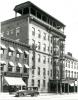
Before the days of the Pennsylvania Turnpike and Interstate 81, and the attendant motels and restaurants, when motoring travelers passed through Carlisle’s downtown on Hanover and High Streets, Carlisle had a notable hotel named the Molly Pitcher Hotel.
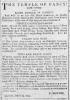
“Kriss Kringle’s Head Quarters” and “The Temple of Fancy,” declared Monyer’s newspaper advertisements.1 Monyer’s store was an emporium of delights for children. Its glass cases displayed candy toys, bon-bons, chocolates, fruit drops, and colorful hard candies.